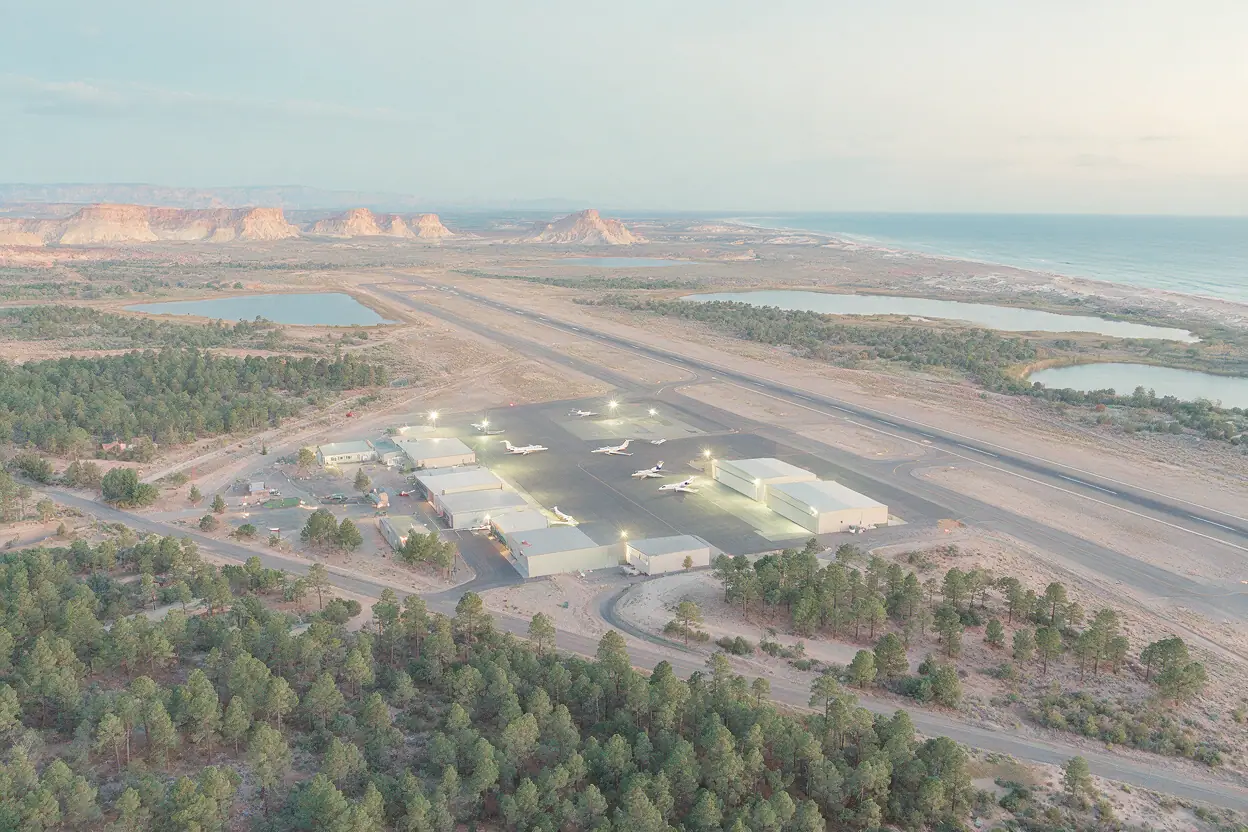
Private charter flight Washington Dulles
A private charter flight Washington Dulles starts with one airport decision and a short list of aircraft that fit it. Dulles sits at 312 ft elevation with a longest runway of 11,500 ft, which opens up most of the fleet. What follows is how the field behaves through the year and where the car drops you.
- KIAD · IADfield codes
- 312 ftfield height
- 11,500 ftlongest strip
- 0 mito New York
Washington Dulles International Airport carries the code KIAD and sits 312 ft above sea level in the Virginia suburbs west of the city. For charter purposes the field matters less for the terminal and more for the runway length and the general aviation side. An 11,500 ft longest runway means midsize and large cabin aircraft can depart with full tanks in most conditions, which is not true at every field this close to the District.
The three names you will see on a charter itinerary here are Atlantic Aviation, Signature Aviation and APP Jet Center at Manassas as a nearby alternative. If your quote names one of the first two, you are going through the Dulles general aviation footprint rather than the main terminal. That distinction changes your arrival instructions, your drive and your ground time, so read the confirmation carefully before you leave.
Charter demand around Washington tracks the government and business calendar more than the tourist season. Inauguration weeks, budget cycles and the spring conference stretch all tighten aircraft availability, and a large cabin booking that is easy in February can be difficult in late April. If your trip is tied to a date you cannot move, then start the aircraft search well before you would for a leisure trip to Florida or the Gulf Coast.
Getting to and from the field
Dulles sits west of the city along the Dulles Toll Road and the Dulles Greenway, with the Silver Line running to the airport for those arriving without a car. The general aviation facilities are separate from the main terminal, so a rideshare driver who hears "Dulles" will default to the airline curb. If you are meeting a charter flight, then give the driver the specific facility name from your confirmation instead of the airport name alone, and allow extra time in the weekday morning peak when the toll road backs up toward the District.
Private jet routes via Washington Dulles
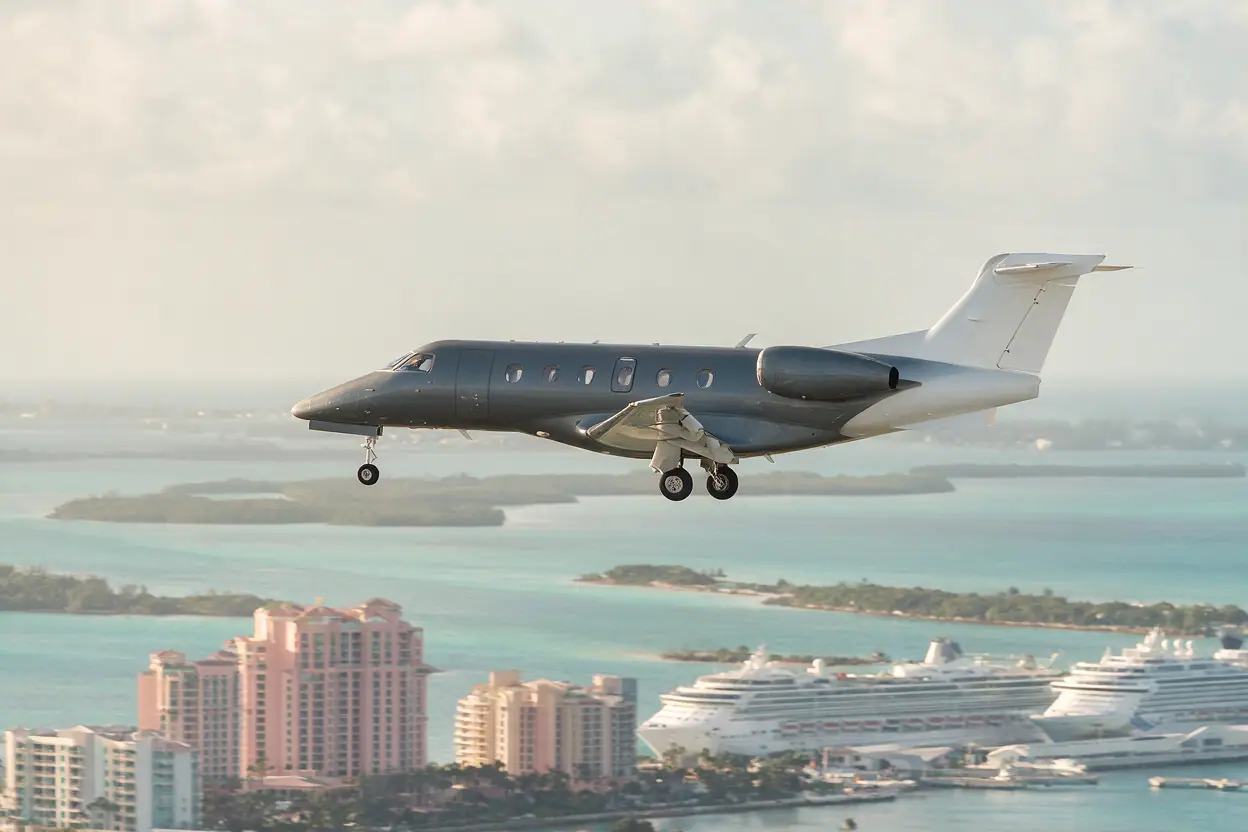
The 6 private jet city pairs here span 199 to 2,129 nautical miles, with one-way light jet quotes running $4,000 to $36,000.
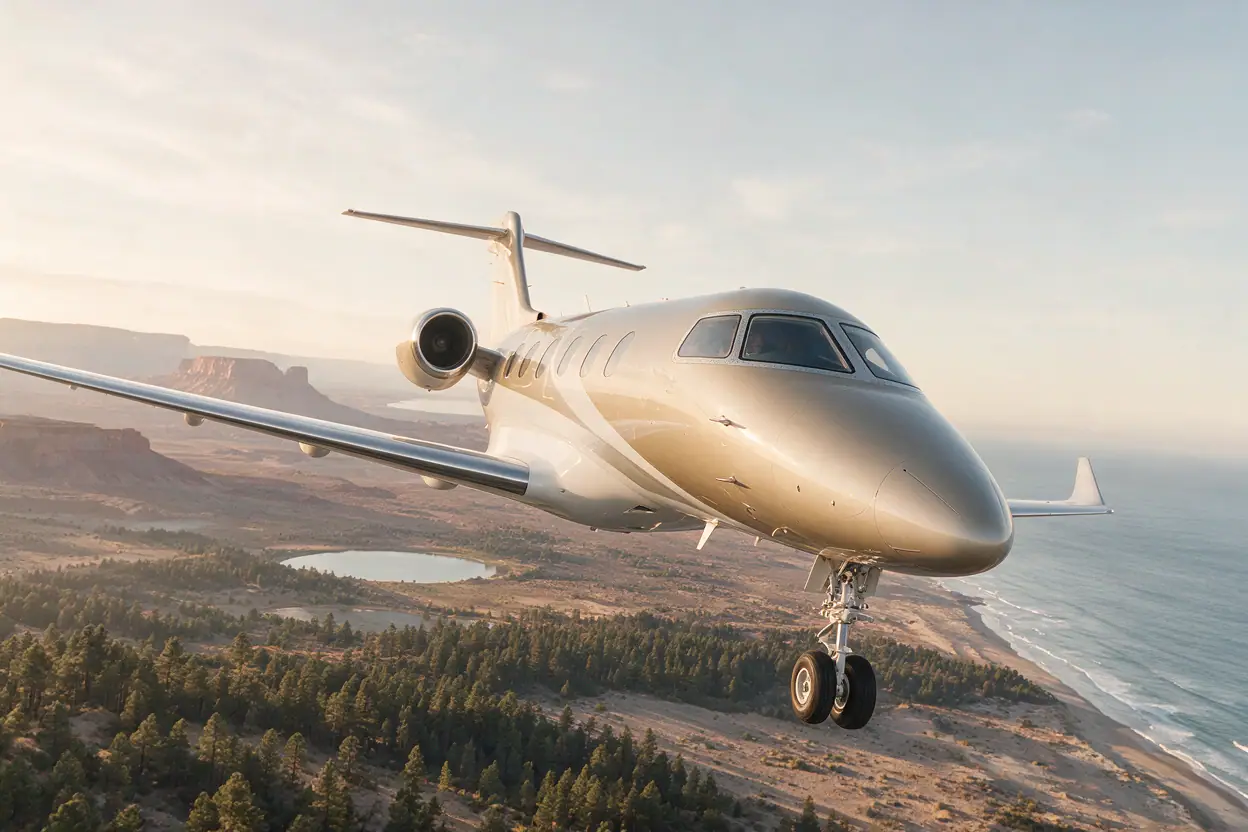
Runways and field conditions at IAD
Dulles has a longest runway of 11,500 ft, enough for a large cabin jet to depart with a full load for a transcontinental leg. Field elevation is only 312 ft, so the airport is rarely the limiting factor in a performance calculation. The constraint is almost always aircraft availability and crew duty time, not concrete. On a hot July afternoon the density altitude works out to roughly 2,400 ft, which most mid and heavy jets handle without a payload cut. Compare that with Centennial outside Denver at 5,885 ft elevation and you see why Dulles is an easy field for the fleet.
| Rwy | Length | Width | Pavement |
|---|---|---|---|
| 01C/19C | 11,500 ft | 150 ft | CONC-G |
| 01R/19L | 11,500 ft | 150 ft | Concrete |
| 12/30 | 10,501 ft | 150 ft | Concrete |
| 01L/19R | 9,400 ft | 150 ft | Concrete |
Weather and density altitude
Dulles runs from a January average high of 43 F to 89 F in July, and the warm months lift density altitude from a negative figure in winter to about 2,400 ft in midsummer. That range matters most for turbo props and light jets on short runways, not for the heavy iron that usually serves this field. If you are booking a light jet for a summer departure with a full cabin, then ask for the performance numbers for your specific aircraft and passenger count rather than assuming the field is fine. The airport's peak density altitude, calculated from the hottest month's average high plus 8 F, reaches about 2,900 ft.
Rain is fairly even across the year, with July and August each averaging 13 wet days and October the driest at 8. Winter weather in the Mid-Atlantic means de-icing queues and the occasional ground stop, and a morning departure in January can slip for reasons that have nothing to do with your aircraft. If your trip connects to a time-critical meeting, then booking the earliest practical departure gives you room to absorb a delay that a mid-afternoon slot does not.
| Mo. | Typical high | Days with rain | Density alt |
|---|---|---|---|
| Jan | 43°F | 9 | -700 ft |
| Feb | 48°F | 11 | -300 ft |
| Mar | 56°F | 10 | 200 ft |
| Apr | 66°F | 12 | 900 ft |
| May | 75°F | 13 | 1,500 ft |
| Jun | 84°F | 12 | 2,100 ft |
| Jul | 89°F | 13 | 2,400 ft |
| Aug | 86°F | 13 | 2,200 ft |
| Sep | 80°F | 11 | 1,800 ft |
| Oct | 69°F | 8 | 1,100 ft |
| Nov | 56°F | 8 | 200 ft |
| Dec | 48°F | 9 | -300 ft |
Where charter flights park at Dulles
Charter flights generally use the general aviation facilities at Dulles rather than the main terminal, with Atlantic Aviation and Signature Aviation as the names you will see on an itinerary. Both handle the aircraft-and-crew side of the trip, and your confirmation should name which one before you book a car. If your schedule puts you into Manassas instead, then the drive time and the ground arrangement are different enough that you should confirm the field before you leave home or the office.
What Dulles is best for
- Transcontinental and transatlantic departures that want a long runway and full fuel
- Business travel into Washington with a short drive to the Virginia and District business districts
- Large cabin and heavy jet trips where field performance is not a concern at any season
- Groups moving through the Mid-Atlantic who want one aircraft rather than commercial connections
| Aircraft | Typical runway need | Local |
|---|---|---|
| Turboprop | 3,300 ft+ | Will fit |
| Light jet | 4,000 ft+ | Will fit |
| Midsize jet | 5,000 ft+ | Will fit |
| Super-midsize jet | 5,200 ft+ | Will fit |
| Heavy jet | 5,600 ft+ | Will fit |
Questions about this airfield
Which airport does a private charter flight Washington Dulles use?
It uses Washington Dulles International, code KIAD, on the Virginia side west of the city. Field elevation is 312 ft and the longest runway is 11,500 ft, so the airport handles light jets through large cabin aircraft without a performance problem. Your itinerary will name either Atlantic Aviation or Signature Aviation on the general aviation side, and that name is what your driver needs.
How much does a private charter flight Washington Dulles cost?
Quotes are estimates that move with aircraft category, crew time and the day of the week, so no single figure holds for every trip. A light jet for a short regional leg sits far below a large cabin jet going coast to coast. Give the broker your passenger count, baggage and both airports, and you will get a real number rather than a range that means nothing.
When is density altitude highest at Dulles?
July is the warmest month with an average high of 89 F, and density altitude then works out to about 2,400 ft. The airport's peak figure, based on the hottest month's average high plus 8 F, is roughly 2,900 ft. Neither number troubles most jets serving the field, but a light aircraft with a full cabin on a hot afternoon deserves a second look.
Can a heavy jet depart Dulles with full fuel?
In most conditions yes, because 11,500 ft of runway and 312 ft of elevation leave plenty of margin. Summer heat raises density altitude but not enough to force a payload cut on typical heavy jets. If your trip is a long transatlantic leg with a full cabin and baggage, then the performance calculation should still be run for that specific aircraft and day, not assumed.
How early should I arrive for a charter departure at Dulles?
Plan to reach the general aviation facility shortly before your departure time rather than hours ahead, since you are not clearing a commercial terminal. Your broker will tell you what the facility expects. If you are on an international leg, then build in time for CBP processing on the return, which happens at the general aviation facility and can take longer than the outbound.
What happens in winter weather at Dulles?
January averages a high of 43 F with 9 wet days, and de-icing is routine on winter mornings. Ground stops and de-icing queues can push a departure back even when your aircraft is ready. If your trip is time-critical, then a morning slot with slack in the schedule protects you better than a tight afternoon connection to another commitment.