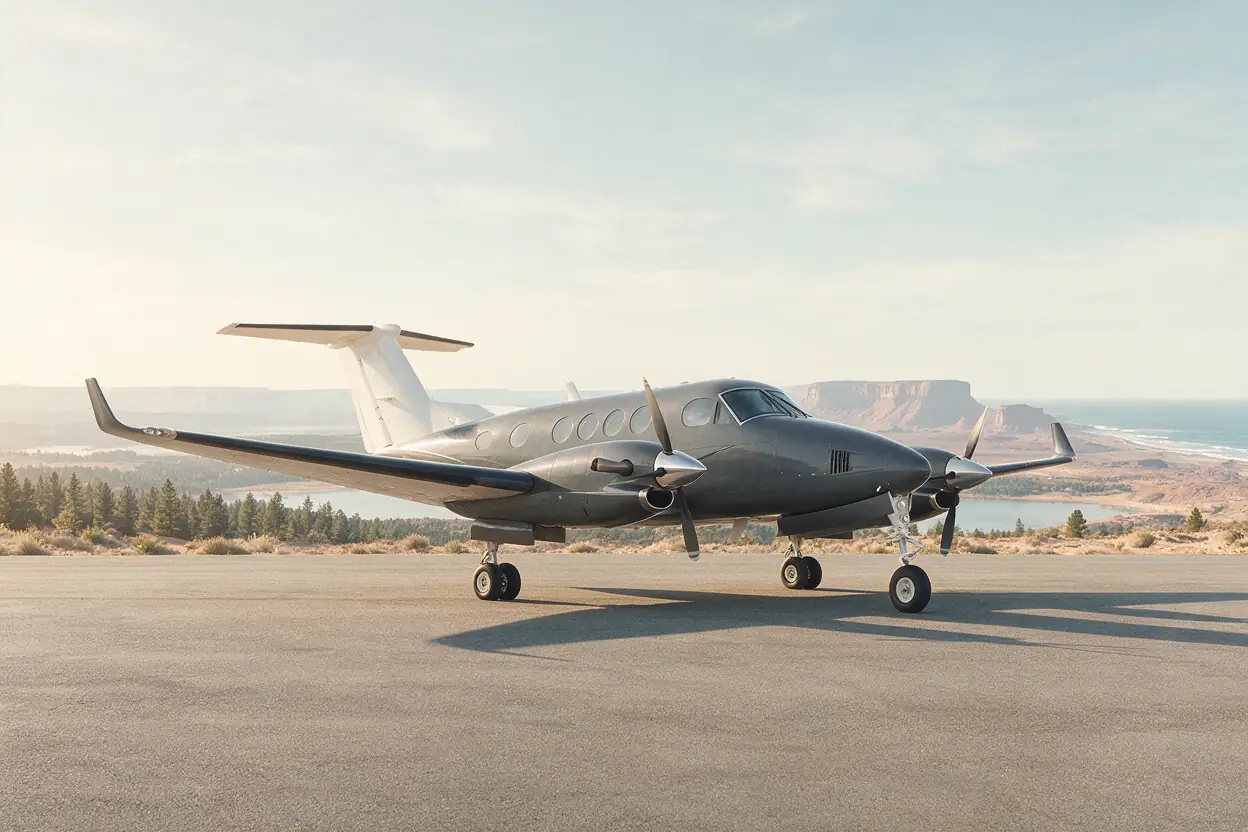
Private charter flight Los Angeles to San Francisco
A private charter flight Los Angeles to San Francisco crosses 279 nautical miles in under an hour and a half. The route runs 55 minutes in a super-midsize jet and 1 hour 17 minutes in a turboprop. Door-to-door time usually decides the aircraft before cabin size does.
- 279 nm321 sm
- 1h 17mturboprop flight time
- $3,000–$4,500one-way quote
Los Angeles to San Francisco private jet costs by aircraft type
Flying private from Los Angeles to San Francisco is 279 nautical miles, about 1h 17m on a turboprop, quoted near $3,000–$4,500 one way.Each class below flies the same 279 nautical miles nonstop. Times are airborne only, so add surface time at both ends before you set them against the drive or the airline day. Prices are estimates for the whole aircraft and move with type, date, direction and repositioning.
| Class | Flight time | One-way ballpark | Notes |
|---|---|---|---|
| Turboprop | 1h 17m | $3,000–$4,500 | Best suited |
| Light jet | 0h 59m | $4,000–$6,000 | No fuel stop |
| Midsize jet | 0h 58m | $5,200–$8,000 | No fuel stop |
| Super-midsize jet | 0h 55m | $7,200–$10,000 | No fuel stop |
| Heavy jet | 0h 55m | $9,500–$14,500 | No fuel stop |
Ballpark figures are for the whole aircraft, not per passenger, and exclude federal excise tax and segment fees. Duration covers taxi, climb and descent.
Flying Los Angeles to San Francisco commercial or private
Airline figures are the cheapest fares Google Flights listed for a single traveller on Dec 9, 2026 (pulled Nov 15, 2026); the charter line is our estimate for the entire aircraft. With 8 passengers, airline first class seats come to roughly $1,232, versus $3,000–$4,500 to charter the entire turboprop.
| Choice | Airline / aircraft | Hours | One-way ballpark | Seat share |
|---|---|---|---|---|
| Airline economy | Frontier · nonstop | 1h 28m | $19 | $19 |
| Airline first class | American · nonstop | 1h 35m | $154 | $154 |
| Turboprop | Entire aircraft, seats 8 | 1h 17m | $3,000–$4,500 | $380–$560 |
Airline ticket prices shift daily and do not cover bags above the fare allowance; the per-seat charter number presumes all seats are occupied.
When to book a private charter
Demand peaks on weekday mornings and early evenings, when business travel between the two cities is heaviest, and it firms around Bay Area convention weeks and major events in San Francisco. Aircraft supply on this corridor is deep, so short-notice requests often clear, but the better turboprops and light jets go first when a busy Monday is on the calendar.
A Friday afternoon southbound leg and a Sunday evening return north carry the strongest premiums on this route, while midweek midday departures sit at the low end of the ranges above. If your dates flex by a day, then shifting to midweek can move the estimate noticeably. If you need a same-day round trip, then a morning north and an afternoon south leaves a full working day in the city.
If you are booking for a Monday morning, then request the aircraft several days out so the turboprops are still on the board. If you travel on a holiday weekend, then expect the premium to show up in both directions and plan the return before the departure.

Leaving Los Angeles
Van Nuys Airport, with an 8,001 ft runway, is the usual departure for the Valley and the westside and saves the drive to Los Angeles International. Burbank's Bob Hope Airport has 6,886 ft, and LAX has 12,894 ft. On a flight this short, the surface drive often outweighs the aircraft choice.
If you start in the Valley or near the 405, then Van Nuys or Burbank usually beats LAX for a hop this brief. If you fly from LAX, then budget for the same terminal congestion every passenger faces there. If you are leaving from a smaller field, then the curb-to-cabin walk is short and the schedule is yours.
Arriving in the Bay Area
San Francisco International, with an 11,870 ft runway, suits downtown and Peninsula business, while Oakland San Francisco Bay Airport at 10,520 ft puts the East Bay within easy reach. Aircraft limits are not the deciding factor here; where your day happens is.
If your meetings are downtown or in Silicon Valley, then SFO is the simpler arrival. If you are heading to Berkeley, Oakland or Walnut Creek, then OAK saves the bridge traffic. If you continue north over the Golden Gate toward Marin, then neither airport is close and the last leg belongs in the plan.
| Field | ID | Rwy |
|---|---|---|
| San Francisco International Airport | KSFO / SFO | 11,870 ft |
| Oakland San Francisco Bay Airport | KOAK / OAK | 10,520 ft |
| Van Nuys Airport | KVNY / VNY | 8,001 ft |
| Hollywood Burbank/Bob Hope Airport | KBUR / BUR | 6,886 ft |
| Los Angeles International Airport | KLAX / LAX | 12,894 ft |
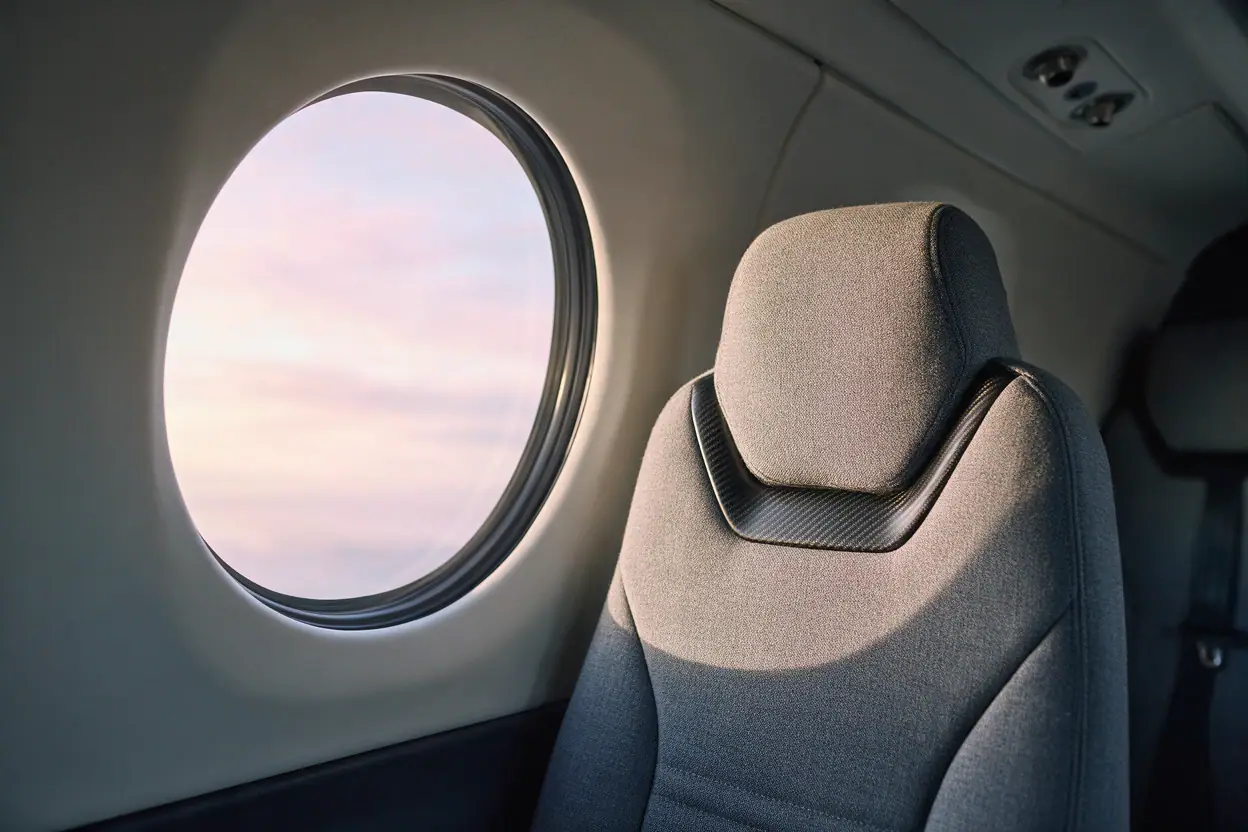
How the turboprop suits this route
On a 279 nautical mile hop, the turboprop covers the route nonstop and keeps costs at the low end of anything on this page. A Daher TBM 960 seats six at 330 knots cruise; a King Air 350i seats eight with 55 cu ft of baggage and a 4 ft 9 in tall cabin. The 1 hour 17 minute block time costs little once you subtract ground time.
Light and midsize jets trim the airborne time but rarely the door-to-door time on this short corridor from Los Angeles to San Francisco. A light jet saves roughly 18 minutes over the turboprop, and super-midsize and heavy aircraft settle near 55 minutes. On a trip this brief, the extra cabin earns less than it would on a transcon leg.
If the party is four or fewer with light bags, then a light jet at the low end of its range often prices close to a turboprop while trimming time. If you carry golf clubs or ski gear, then confirm the hold, because turboprop storage is generous but finite. If the schedule is fixed and the group is large, then a heavy jet earns its premium.
Daher TBM 960
- 6 seats
- 330 kt cruise
- 1,730 nm max range
Cabin of 4 ft tall, 13 ft 3 in long. Luggage 32 cu ft.
Beechcraft King Air 350i
- 8 seats
- 312 kt cruise
- 1,800 nm max range
Cabin of 4 ft 9 in tall, 16 ft 8 in long. Luggage 55 cu ft.
Other private jet routes like Los Angeles–San Francisco
The 6 private jet city pairs here span 183 to 359 nautical miles, with one-way turboprop quotes running $2,200 to $5,500.
Queries on this lane
How long is a private charter flight Los Angeles to San Francisco?
Airborne time runs from 55 minutes in a super-midsize or heavy jet to 1 hour 17 minutes in a turboprop. Light jets average 59 minutes and midsize aircraft 58 minutes. Add taxi and surface time at both airports, then set the total against the drive or the airline day before deciding which class is worth the money.
What does a private charter flight Los Angeles to San Francisco cost?
Estimates for the whole aircraft start around 3,000 to 4,500 dollars for a turboprop and run to 9,500 to 14,500 dollars for a heavy jet. Light jets fall near 4,000 to 6,000 dollars, midsize 5,000 to 8,000 dollars and super-midsize 7,000 to 10,000 dollars. These are ranges; date, direction and availability move the final quote.
Which aircraft is best for this short hop?
The turboprop suits most parties over 279 nautical miles. A Daher TBM 960 carries six passengers at 330 knots cruise, and a King Air 350i carries eight with 55 cu ft of baggage, both nonstop. Light and midsize jets are faster by roughly 18 minutes but cost more per hour of use on a trip this brief.
Can I fly into Oakland instead of San Francisco?
Yes. Oakland San Francisco Bay Airport has a 10,520 ft runway and is often the better arrival for the East Bay, Berkeley or Contra Costa County. San Francisco International has an 11,870 ft runway and suits downtown and Peninsula business. Ask for both in the quote, because the airport can change the price and the drive at the far end.
Is a same-day round trip realistic on this route?
It is, and plenty of travelers do it. With 55 to 77 minutes of flying each way, a morning departure north and an afternoon return south leaves several usable hours in the city. Build in margin for the return, since late-day congestion in Bay Area airspace and at the airports is the usual source of delay on a weekday.
What changes the price on this distance more than anything else?
Date and direction. Weekday morning and Friday afternoon departures carry the strongest premiums, and Sunday evening northbound legs are close behind. Short-notice bookings can still clear because aircraft supply is deep, but the turboprops go first. Repositioning and one-way pricing also matter, so ask whether the aircraft is already in the area.